
 English
 中文简体
中文简体 Español
 عربى
عربى
Vented Cap Liners: How They Work, When to Use Them, and How to Select the Right Option
 2026.08.24
 Noticias de la industria
Contenido
- 1 What Are Vented Cap Liners and How Do They Work?
- 2 Why Sealed Containers Need a Vented Cap Liner
- 3 Vented Cap Liners vs. Standard Cap Liners: What Actually Changes
- 4 How to Select a Vented Cap Liner That Passes Validation
- 5 Applications That Show the Value of Vented Cap Liners
- 6 Frequently Asked Questions About Vented Cap Liners
Run a sealed 1 L PET bottle of bleach from a coastal plant to a warehouse at 2,000 m elevation and the arithmetic is unforgiving. External pressure drops by roughly 22 kPa while the headspace inside the bottle holds its original force, so the lid bulges, the liner domes, and the seal begins to creep. At scale that is not a nuisance; it is a leaker rate, a return rate, and a recall exposure. Vented cap liners are the closure component that removes this failure mode by design.
Vented cap liners keep the product liquid-tight while allowing a controlled, two-way flow of air through the closure. Gas exits when heat or off-gassing raises internal pressure, and air re-enters when cooling or altitude changes create a vacuum. This article explains how vented cap liners work, the pressure conditions that justify them, the engineering checks that decide whether a liner will pass validation, and the applications where they deliver measurable results.
What Are Vented Cap Liners and How Do They Work?
A vented cap liner is a closure insert that combines a gas-permeable membrane with a structural carrier, so the package exchanges air without leaking liquid. The membrane is the functional core: a thin ePTFE (expanded polytetrafluoroethylene) film with pores around one micron, compared with a water droplet at roughly 100 microns. Gas molecules pass freely through the micro-pores, while liquid water, droplets, and most contaminants cannot enter.
The carrier layer determines how the liner behaves on the filling line. Foam-pad liners carry a membrane in the center of a compressible disc; foil-backed liners integrate a membrane window into an aluminum carrier. Both use the same pressure-equalizing principle but differ in seal method, peel resistance, and induction-sealing compatibility. The membrane itself, produced as a dedicated ePTFE waterproof breathable membrane , is inert, hydrophobic, and stable from about -40°C to 120°C, which covers hot-fill, pasteurization, and cold-chain shipping.
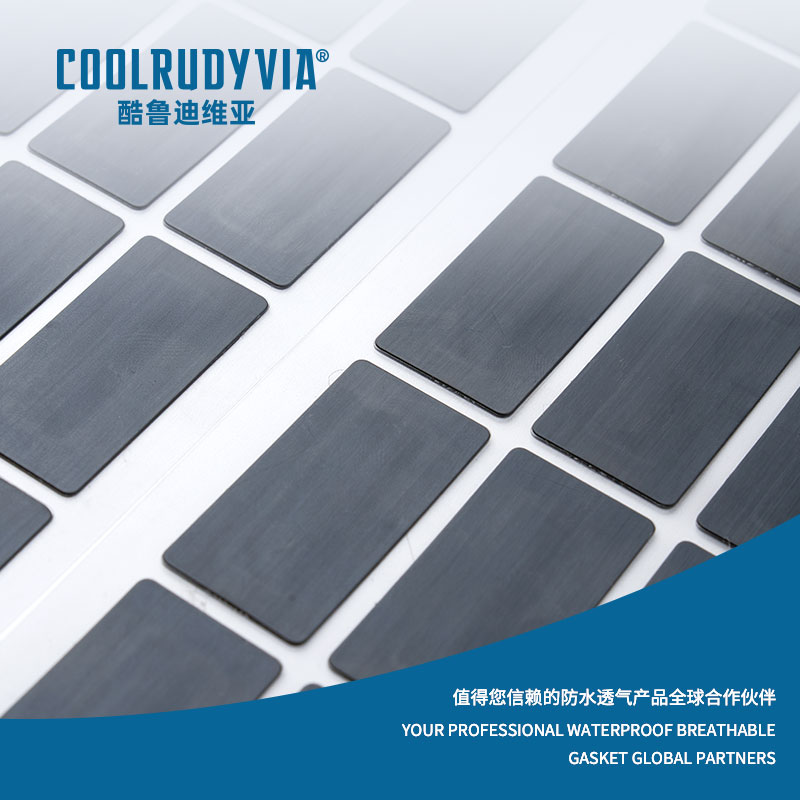 Wholesale ePTFE Vent Membrane/Cap For Automotive Lamps Suppliers Changzhou Baonong Offer Wholesale IP67/IP68 ePTFE Vent Membrane/Cap For Automotive Lamps, We Are China ePTFE Vent Membrane/Cap Suppliers,... View Product →
 Manufacturers such as Changzhou Baonong New Material Technology Co., Ltd. (brand COOLRUDYVIA) build these liners as integrated components rather than loose membranes, which changes the quality outcome. When the membrane, carrier, and adhesive are assembled in one automated process and checked by automated plus manual inspection, the customer receives a defined vent rate instead of a variable result.
Why Sealed Containers Need a Vented Cap Liner
Pressure differentials that exceed the liner's sealing force are the most common cause of cap dome, liner bulge, and sidewall collapse in rigid packaging, and a vented cap liner is the component that accepts those differentials without failing.
Three conditions stress a sealed package. Altitude changes external pressure; temperature changes headspace pressure; and product chemistry generates gas over time. Each acts on a different timescale, which is why a liner can pass compression testing at the plant and still leak during distribution.
Altitude is easiest to quantify: a truck route from a lowland plant to a 2,000 m plateau exposes sealed bottles to a roughly 22 kPa swing, and if the closure cannot move air, the liner absorbs the whole differential. Temperature behaves the same way — a 10°C rise adds about 3.4 kPa of pressure in a fixed headspace, and a hot-fill cool-down of 70°C creates a vacuum close to 20 kPa. Off-gassing is product-specific: hydrogen peroxide cleaners release oxygen continuously, so a closed bottle can accumulate more than 30 kPa in a month of warehousing.
Vented Cap Liners vs. Standard Cap Liners: What Actually Changes
The measurable difference is not whether the liner blocks liquid — both types do — but what happens when the package cannot move gas. A standard PE foam or pulp liner seals by compression; it holds liquid until the differential overcomes the compressive force, then it creeps and leaks. A vented cap liner removes the pressure reason to leak, because gas moves through the membrane before the differential can distort the liner.
In liquid and solid packaging, the most common drop-in is a pre-cut waterproof breathable gasket that assembles into a standard closure without changing the capping line. The same bottle, the same cap, and the same fill temperature then behave differently in the field.
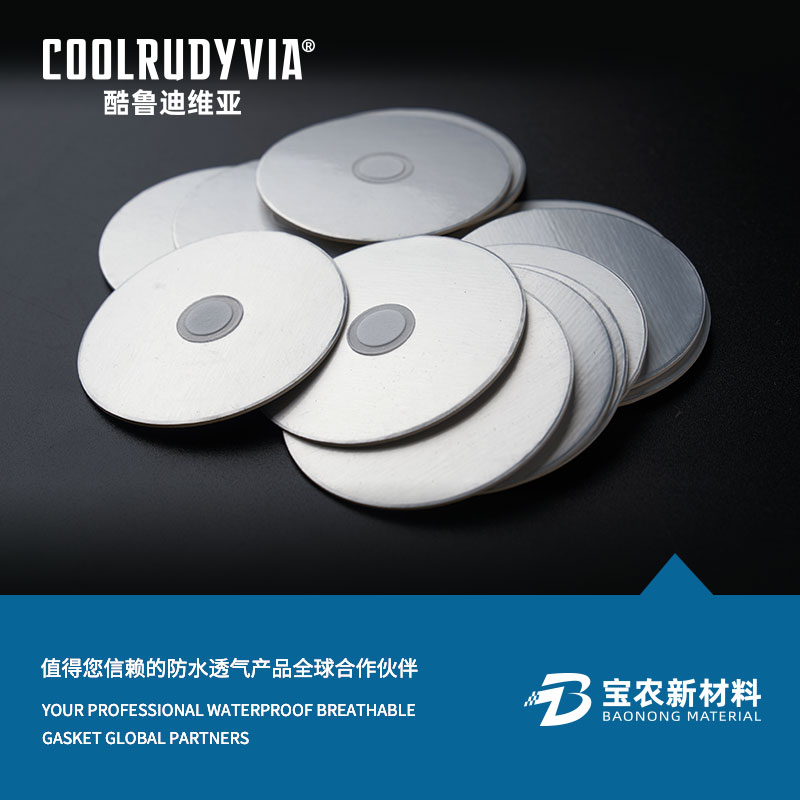 Waterproof Breathable Induction Vented Foil Gasket Manufacturers Baonong Is China Waterproof Breathable Induction Vented Foil Gasket Manufacturers, Factory, We Offer Sealing Gaskets For Small Packaging ... View Product →
 Vented cap liner
- Two-way air exchange through the membrane.
- Liquid barrier rated by liquid entry pressure.
- Stable cap torque during altitude and temperature shifts.
- No bulge point where leaks can start.
Standard cap liner
- Flat, sealed barrier with no designed gas path.
- Leakage begins when pressure overcomes compression.
- Cap dome and liner distortion above a few kPa.
- Lower component cost, higher field leak risk.
| Property | Standard cap liner | Vented cap liner |
| Two-way gas flow | None | Bidirectional through membrane |
| Liquid tightness | Yes, until compression fails | Yes, to rated liquid entry pressure |
| Pressure equalization | Not possible | Continuous, passive |
| Leak onset | Above a few kPa of differential | Only if membrane is blocked or LEP is exceeded |
How to Select a Vented Cap Liner That Passes Validation
Selection is not a material choice; it is a vent-rate and liquid-entry-pressure specification that has to match the product, the fill temperature, the cap, and the distribution route. Ask for four numbers before you test a sample.
- Vent rate at 100 mm water-column differential. A practical range for cap liners is 60 to 600 ml/min. Choose the lower end for thin liquids and the higher end for products that off-gas rapidly.
- Liquid entry pressure (LEP). A minimum of 20 kPa is common for cap liners. Surfactants can reduce the effective LEP, so test with the actual product, not with water.
- Carrier construction. For an induction-sealable vented liner, the foil layer must not cover the membrane window. For a pressure-sensitive liner, adhesive compatibility with the cap material matters more.
- Dimensional seating. The liner OD must match the internal cap step. A liner that shifts off-center changes the effective vent path and the sealing force.
There are also line-side checks. Confirm that the liner survives fill-head temperature and capping compression without deforming the carrier, and verify that the vent is not blocked by product splashing onto the membrane. Some closures add a protective cap layer or internal ribs for exactly this reason.
Foil-backed vented liner
- Induction tamper evidence and higher stiffness.
- Better moisture barrier for longer shelf life.
- Membrane window die-cut into the foil layer.
Foam-pad vented liner
- Pressure-sensitive application without heat.
- Softer seating on rough bottle rims.
- Membrane bonded into the foam disc.
For a foil carrier, an aluminum foil gasket with an integrated membrane window is the standard route; foam-pad systems use the membrane-bearing disc itself. For a fuller comparison of carrier materials and performance data, read this material selection guide for breathable gaskets .
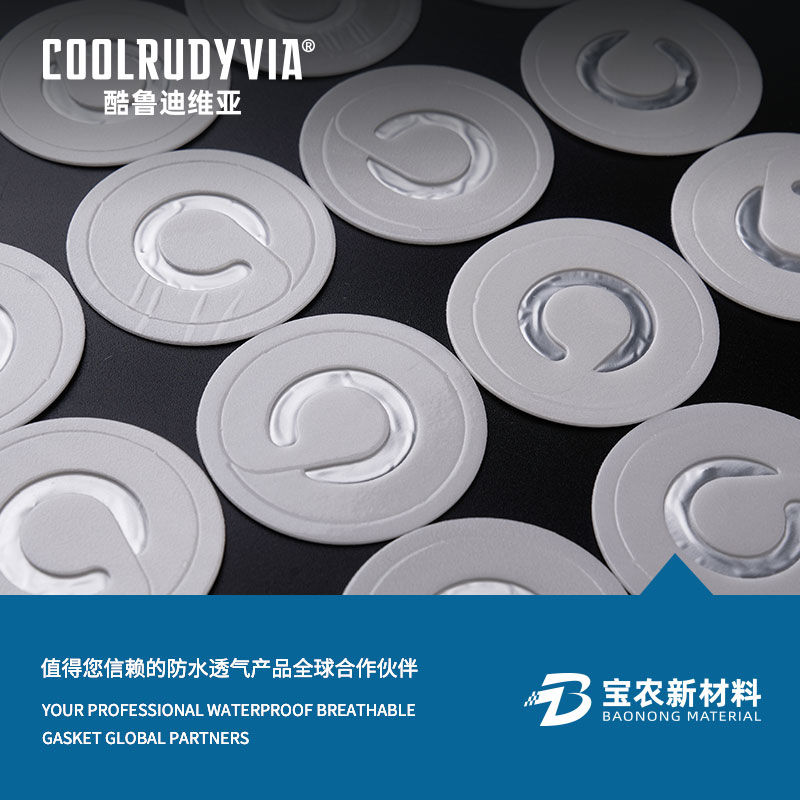 Aluminium Foil Seal Liner, Aluminum Foil Gasket Manufacturers We Are China Aluminium Foil Seal Liner, Aluminum Foil Gasket Manufacturers, Factory, Changzhou Baonong Offer Custom 0.8/1.0 Two-Piece HDP... View Product →
 Applications That Show the Value of Vented Cap Liners
Vented cap liners earn their cost wherever a sealed package has a gas reason to change pressure after capping. The clearest return is in hydrogen peroxide-based household cleaners, chlorine sanitizers, and quaternary disinfectants — products that release gas continuously.
Contract packers moving these products through high-altitude and hot-lane distribution report a measurable drop in cap bulging and leakers after switching to vented closures. Beverage and hot-fill food are the second cluster: cooling creates a vacuum, and the liner pulls air back instead of letting the bottle collapse or the cap seal draw inward. Pesticide and agrochemical containers use the same membrane technology through a breathable cap or plug, which also improves operator safety when the container is vented before pouring. In each case the vented cap liner converts a shipping problem into a static, passive feature of the closure.
Frequently Asked Questions About Vented Cap Liners
How much vent rate does a vented cap liner need?
Typical cap liner vent rates fall between 60 and 600 ml/min at a 100 mm water-column differential. Products with strong off-gassing, such as peroxide bleach, need the upper half of that range; stable liquids can use a lower rate that still equalizes altitude and temperature changes.
Can a vented cap liner be used for induction sealing?
Yes. Foil-backed vented liners combine an induction-sealing aluminum layer with a membrane window that stays clear of the foil. The induction heat bonds the liner to the container rim while the vent path continues to function.
What is the difference between a vented liner and a vented plug?
A vented liner is a flat disc inside the cap, used on bottles and jars. A vented plug is a threaded or press-fit component for enclosures and large containers with thicker walls. Both use ePTFE membrane technology, but the liner is sized for closure sealing and the plug for housing or tank openings.
Does a vented cap liner leak if the bottle is tipped over?
No, within the rated liquid entry pressure. Water cannot enter the membrane pores at normal spill and inversion pressures, which is why these liners pass inverted-bottle leak tests while still moving gas at distribution pressures.

- Correo electrónico
-
Número de teléfono
+86 138 6105 7907
-
Dirección
No. 58 Fengjiatou, Aldea de Xiaoliu, Pueblo de Luoyang, Distrito de Wujin, Ciudad de Changzhou, Provincia de Jiangsu, China
Derechos de autor © Changzhou Baonong New Material Technology Co., Ltd.Reservados todos los derechos
Membranas/Juntas/Tapones/Tapas Impermeables y Transpirables Personalizadas
